
The “Union Tool Company”: a classic case of a multi-brand marketing strategy

Collectors of Axes, and Kelly made axes in particular, will eventually run across axes marked with the “Union Tool Co. Charleston, W.VA. U.S.A.” stamp. Many will stumble on thoughts of older companies in Charleston, buy outs, and corporate take overs, with some other “experts” mentioning that the Union Tool Company was an axe manufacturer of Charleston, West Virginia, that was competitive with or operating prior to the Kelly Axe Manufacturing Company. Unfortunately, the true story is less exciting than that, or, perhaps, if you enjoy business and marketing tactics, even more interesting!
Union Tool Company axes and hatchets began to appear in Kelly based marketing in late 1930 and continued to be included in Kelly catalogs through 1938. This brand was not listed alongside other Kelly tools, and was typically isolated to completely separate pages within the Kelly and American Fork and Hoe Company catalogs. On those pages it was described as an “entirely different grade from our other tools”. Axes, Hatchets, trade hatchets, and hammers were all marketed under this “company” name, so what was the “Union Tool Company of Charleston, West Virginia”?
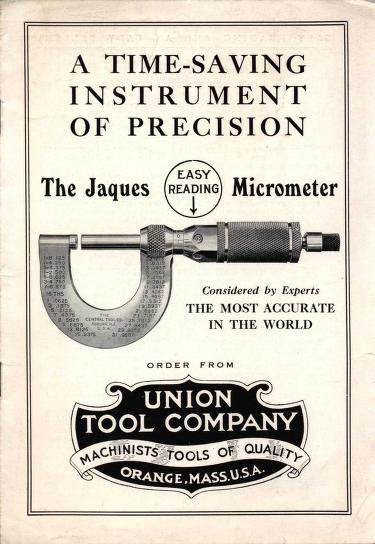
A quick search of the name “Union Tool Company” will lead any researcher to literally dozens of companies that used that name. Union Tool Companies were listed in Orange and Goshen, Massachusetts; Ventura, Los Angeles, and Torrance, California; St. Louis, Missouri; Pittsburg, Pennsylvania, and many other locations across the nation. However, a deep dive into the city business directories for Charleston, West Virginia, from 1903 until 1958 shows absolutely no listings for a company of that or a similar name.
It’s important to remember WHEN the Union Tool Company brand came into existence. 1930: the first full year of the Great Depression. The Kelly Axe and Tool Company (and it’s predecessors) had spent 56 years at that point pushing the fact that all of their products were high grade, even the mid- to low-end lines. “Kelly Quality” had arisen during the “Roaring 20s”, and the “True Temper” grade was now applied to many of their products. As the Depression took hold of the country, the company needed to balance a low grade line into their marketing strategy without tarnishing the Kelly name. This marketing need was not novel to the Kelly company, and is still a need that is seen in sales today. It is generally referred to as a multi-brand strategy, a brand portfolio strategy, or occasionally a brand cannibalizing strategy. One common example of this in everyday use is Proctor and Gamble’s marketing of laundry detergents Tide and Gain. Tide tends to be slightly more expensive and marketing of it focuses on excellent cleaning abilities. Gain tends to be slightly less expensive and has a market focus on smelling pleasant. Both are made and marketed by Proctor and Gamble. Though this may seem like “self-competition”, the strategy tends to lead to the opposite, by filling more market niches through diversification, and decreasing external competition. This, in turn, increases the company’s market share, as whether you buy cheap or go for the high end, Proctor and Gamble still makes the sale. Likewise, whether a consumer in 1932 was thrifty and bought a “Union Tool Company” axe, or splurge on a Kelly Perfect, the Kelly Axe and Tool Works still made a profit.
The popularity of the “Union Tool Company” name likely made it very hard to associate with any one entity. This insinuates the use of the name may have been due to its extremely generic, and un-trademarkable, nature. The name may have held a negative connotation for the Kelly family, as the Union Forge was the failed business of the previous Kelly generation, and the Union Trust Company was the receiver who held the Kelly Axe Manufacturing Company in limbo while it was struggling in Alexandria. However, that may be circumstantial, as only 3 Kelly family members, William C. Kelly, Gerrard Kelly, and George T. Price, were still involved in the company, and none were likely directly related to marketing at that point. The Union Tool Company brand continued to serve its purpose through the Great Depression, only being beaten out for a lower price by spontaneous lines such as the Panther in 1935. However, both were described as being manufactured in the exact same way, with little to no flair and very low refining. The line would morph into the “Union” line in the late 1930s and 1940s, but would eventually be discarded all together shortly after World War II as diversification became severely restricted and better marketing lines, such as the Woodslasher, took the spot of the lower end axe options. Despite a confusing history rooted simply in marketing strategy, the Union Tool Company brand of the Kelly Axe and Tool Works remains an interesting and fun line to be found by modern day collectors.


Comments